Vitamin D Deficiency: What Your 25-OH-D Level Means (2026)
Summary & Key Takeaway
Vitamin D deficiency affects approximately 40% of US adults and over 1 billion people worldwide, making it the most common nutritional deficiency in the developed world. The standard test is 25-hydroxyvitamin D (25-OH-D or calcidiol), which reflects the body's vitamin D stores. The result is classified as deficient (below 20 ng/mL), insufficient (20-30 ng/mL), sufficient (30-100 ng/mL), or potentially toxic (above 150 ng/mL). Understanding your result and the appropriate response is essential because both deficiency and excess have clinical consequences.
?? Core Insights
- The 25-hydroxyvitamin D test reflects vitamin D stores over the past 2-3 months. The standard reference ranges are deficiency below 20 ng/mL, insufficiency 20-30 ng/mL, and sufficiency 30-100 ng/mL.
- Vitamin D deficiency affects approximately 40% of US adults, with higher rates in older adults, people with darker skin, and those living at northern latitudes.
- Common symptoms of vitamin D deficiency include fatigue, bone pain, muscle weakness, frequent infections, and mood changes. Many patients with mild deficiency have no symptoms at all.
- Vitamin D supplementation is appropriate for most adults with levels below 30 ng/mL, but the dose depends on the severity of deficiency and the patient's body weight.
- Premedice's free AI blood test review can identify vitamin D deficiency patterns and recommend whether supplementation is appropriate based on your specific level.
Try it yourself — free
Experience the medical AI that powers this article. Ask questions, check symptoms, or analyze lab results.
Want to know what a tool does with a panel like yours? See how the lab interpreter reads a blood panel.
Related Lab Tests
What the 25-Hydroxyvitamin D Test Measures
The 25-hydroxyvitamin D (25-OH-D) test is the standard test for vitamin D status. The test measures the main circulating form of vitamin D, which is produced by the liver after vitamin D is made in the skin or absorbed from food. 25-OH-D has a half-life of 2-3 weeks, which means the test reflects vitamin D stores over the past 2-3 months, not just the most recent dose.
The test comes in two forms: 25-OH-D2 (ergocalciferol) and 25-OH-D3 (cholecalciferol). Vitamin D2 is found in some supplements and fortified foods. Vitamin D3 is made in the skin in response to sunlight and is the form in most modern supplements. Most laboratories report the total 25-OH-D (D2 + D3), which is the appropriate measure for assessing overall vitamin D status.
The reference ranges for 25-OH-D are not universally agreed upon. The Endocrine Society defines deficiency as below 20 ng/mL (50 nmol/L), insufficiency as 20-30 ng/mL, and sufficiency as 30-100 ng/mL. The Institute of Medicine uses a slightly different threshold, defining deficiency as below 12 ng/mL. Many functional medicine practitioners use a higher threshold for optimal levels, targeting 40-60 ng/mL. The mainstream reference ranges are the most widely accepted for clinical decision-making.
Why Vitamin D Deficiency Is So Common
Vitamin D is unique among vitamins because it is produced by the skin in response to UVB sunlight. The recommended exposure for vitamin D synthesis is approximately 10-30 minutes of midday sun on the face, arms, and legs, 2-3 times per week. This exposure is sufficient to maintain adequate vitamin D levels in most people during summer months. However, many factors limit vitamin D synthesis: living at northern latitudes (above 35 degrees), winter months, dark skin, sunscreen use, age over 65, and indoor lifestyle.
Latitude is a major determinant of vitamin D status. People living above 35 degrees latitude (which includes most of the United States, all of Canada, and northern Europe) cannot synthesize vitamin D from sunlight during winter months because the UVB rays are too weak. The 'vitamin D winter' typically lasts from October to March in the northern US. During this period, vitamin D levels drop by 20-30% in people who do not supplement.
Skin pigmentation and age are also significant factors. Melanin in darker skin blocks UVB rays, reducing vitamin D synthesis by 50-90% compared to lighter skin. Adults over 65 produce approximately 25% less vitamin D in the skin compared to younger adults. Cultural factors (clothing that covers most of the skin, indoor lifestyle) also contribute to deficiency. The combination of these factors explains why vitamin D deficiency is so widespread, even in sunny countries.
The Symptoms of Vitamin D Deficiency
Many patients with vitamin D deficiency have no symptoms at all. The symptoms that do occur are often nonspecific and attributed to other causes. Common symptoms include fatigue, bone pain (particularly in the lower back and hips), muscle weakness, frequent infections (vitamin D plays a role in immune function), slow wound healing, mood changes (depression, seasonal affective disorder), and hair loss.
Severe vitamin D deficiency causes rickets in children and osteomalacia in adults. These are conditions of defective bone mineralization, where the bones become soft and weak. Osteomalacia presents with bone pain, difficulty walking, and fractures with minimal trauma. The presentation is dramatic and clearly linked to vitamin D deficiency. The milder symptoms of moderate deficiency are less specific and harder to attribute.
Several studies have linked vitamin D deficiency to a wide range of conditions, including cardiovascular disease, diabetes, autoimmune diseases, certain cancers, and cognitive decline. The causal relationship is debated for many of these conditions. Vitamin D supplementation has shown benefit for some (reducing falls in older adults, reducing cancer mortality) but not others (preventing cardiovascular events, preventing depression). The strongest evidence for supplementation is in patients with documented deficiency.
How to Treat Vitamin D Deficiency
Treatment depends on the severity of deficiency. Patients with severe deficiency (below 12 ng/mL) typically receive high-dose vitamin D3 (50,000 IU weekly for 8-12 weeks) followed by maintenance therapy. Patients with insufficiency (20-30 ng/mL) typically benefit from 1,000-2,000 IU daily of vitamin D3. Patients with levels in the normal range (30-100 ng/mL) can take 1,000 IU daily for maintenance, particularly during winter months.
Vitamin D3 (cholecalciferol) is preferred over vitamin D2 (ergocalciferol) for supplementation. Vitamin D3 is more effective at raising and maintaining 25-OH-D levels, with studies showing it is 2-3 times more potent than vitamin D2. Vitamin D3 is also more stable in supplements and has a longer shelf life. Most over-the-counter vitamin D supplements contain D3, but it is worth checking the label.
The response to vitamin D supplementation varies based on body weight, baseline level, absorption, and adherence. Heavier individuals need higher doses. Patients with malabsorption (celiac disease, inflammatory bowel disease, gastric bypass) may need higher doses or alternative formulations. Routine monitoring of 25-OH-D is recommended 3 months after starting supplementation to confirm the response and adjust the dose if needed.
How Much Vitamin D Should You Take
The recommended daily allowance (RDA) for vitamin D is 600 IU for adults under 70 and 800 IU for adults over 70, according to the Institute of Medicine. However, many experts consider this RDA too low for the modern population, particularly for people with limited sun exposure. The Endocrine Society recommends 1,000-2,000 IU daily for most adults, with higher doses for those with documented deficiency.
The tolerable upper intake level (UL) is 4,000 IU per day for adults. This is the maximum daily intake that is unlikely to cause adverse effects in the general population. Toxicity is rare at doses below 10,000 IU per day but occurs when 25-OH-D exceeds 150 ng/mL. Vitamin D toxicity causes hypercalcemia (high blood calcium), which can lead to nausea, vomiting, weakness, kidney stones, and kidney damage. Patients on high-dose supplementation should be monitored with periodic 25-OH-D and calcium testing.
Diet alone is rarely sufficient to maintain adequate vitamin D levels. The best dietary sources are fatty fish (salmon, mackerel, sardines), cod liver oil, egg yolks, and fortified foods (milk, orange juice, cereals). A 3-ounce serving of salmon provides approximately 450 IU of vitamin D. To reach 1,000 IU from food alone, you would need to consume salmon daily or take a supplement. For most adults, daily supplementation is the most reliable way to maintain adequate vitamin D levels.
The Calcium and Vitamin D Connection
Vitamin D and calcium work together. Vitamin D is essential for calcium absorption in the gut. Without adequate vitamin D, the body absorbs only 10-15% of dietary calcium. With adequate vitamin D, absorption increases to 30-40%. This is why vitamin D deficiency can lead to calcium deficiency even when dietary calcium intake is adequate, and why both calcium and vitamin D are recommended together for bone health.
The recommended calcium intake is 1,000 mg per day for adults under 50 and 1,200 mg per day for women over 50 and men over 70. Most adults can meet this requirement through diet (dairy products, leafy greens, fortified foods, calcium-set tofu). Calcium supplementation is appropriate for patients who cannot meet the requirement through diet alone, particularly postmenopausal women and older adults.
Bone density screening (DEXA scan) is recommended for women over 65 and men over 70, with earlier screening for adults with risk factors (low body weight, smoking, family history of fracture, glucocorticoid use). The combination of vitamin D supplementation, calcium intake, and weight-bearing exercise is the foundation of osteoporosis prevention. For patients with documented osteoporosis, bisphosphonate medications (alendronate, risedronate, zoledronic acid) are added to the regimen.
Vitamin D, COVID-19, and Immune Function
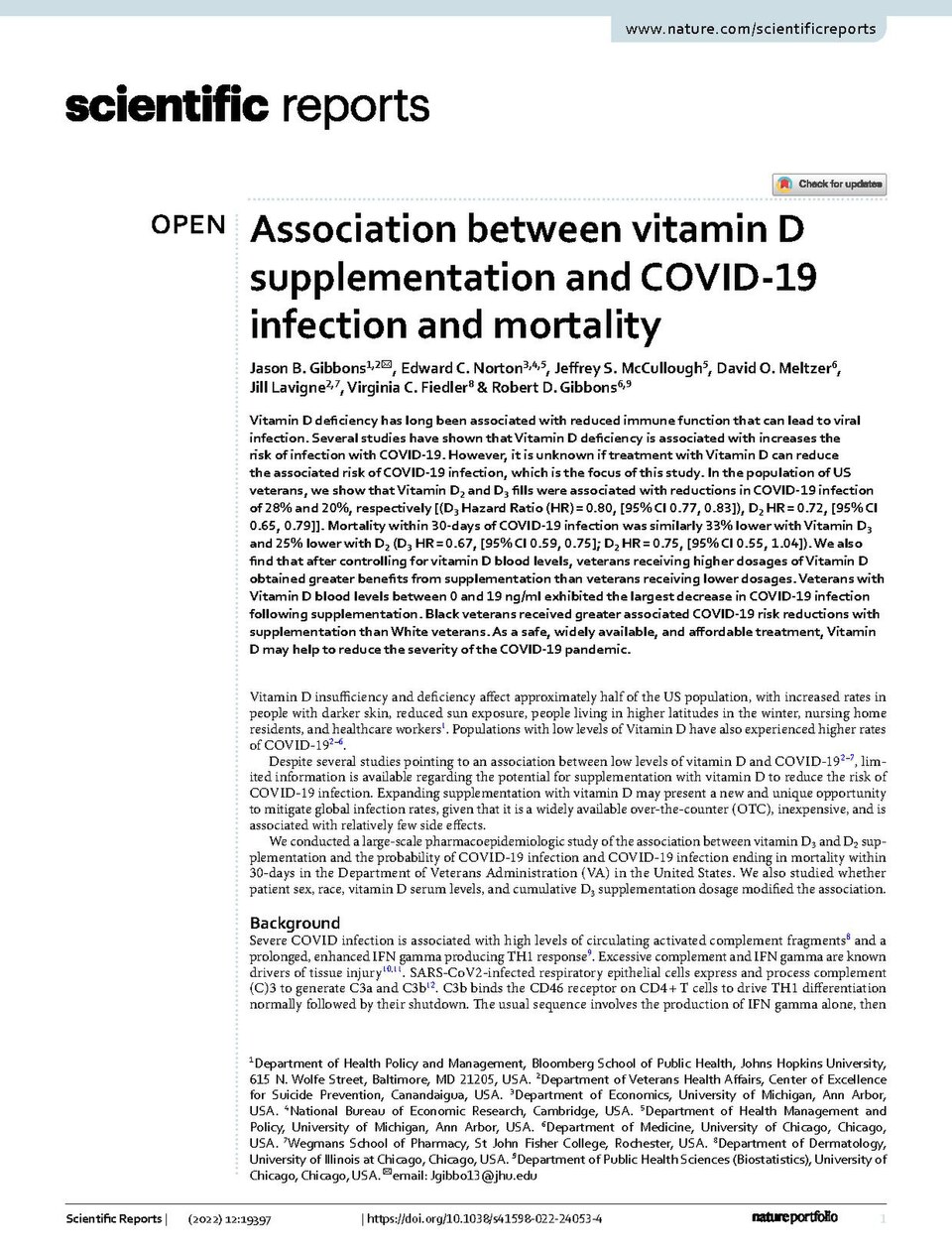
Vitamin D plays a role in immune function, which has spurred interest in its potential role in COVID-19 and other infections. Early observational studies showed that vitamin D deficiency was associated with more severe COVID-19 outcomes. Subsequent randomized trials produced mixed results, with some showing benefit of vitamin D supplementation for prevention or treatment of COVID-19 and others showing no effect.
The current consensus is that vitamin D supplementation is appropriate for patients with documented deficiency, but routine supplementation at high doses for COVID-19 prevention is not supported by strong evidence. A 2024 Cochrane review concluded that vitamin D supplementation does not reduce the risk of COVID-19 infection but may reduce the severity of illness in patients with baseline deficiency.
More broadly, vitamin D supplementation has been studied for its effects on autoimmune diseases, cardiovascular disease, cancer, and cognitive decline. The strongest evidence for non-bone benefits is in reducing falls and fractures in older adults, reducing cancer mortality (particularly colorectal cancer), and reducing autoimmune disease activity. The evidence is weaker for cardiovascular disease prevention and cognitive protection. Vitamin D supplementation is a low-cost intervention with a strong safety profile, and the risk-benefit calculation favors supplementation for most adults.
How to Use Your Vitamin D Results Before Your Doctor Visit
Receiving a vitamin D result can be confusing, particularly when the value is borderline. The categories of deficiency, insufficiency, and sufficiency are not always intuitively clear, and the appropriate response depends on the specific value. An AI blood test review can help you understand what your result means and whether supplementation is appropriate.
The most useful information to bring to your doctor visit is your specific 25-OH-D value, the date of the test, and any prior results. The trend of vitamin D over time is more informative than a single value. Some patients have been tested multiple times over years, and the trajectory of their levels tells the story of whether supplementation is working, whether seasonal variation is significant, and whether additional interventions are needed.
For patients who want to optimize their vitamin D levels, the recommended approach is daily supplementation with 1,000-2,000 IU of vitamin D3, retesting after 3 months, and adjusting the dose based on the response. Patients with severe deficiency may need higher initial doses (often prescription-strength 50,000 IU weekly for 8-12 weeks) followed by maintenance. The AI review can help you understand which category your result falls into and what the appropriate response is.
Ready to try Premedice?
Get instant, AI-powered explanations of your lab results and symptoms — powered by 300+ medical databases.
Continue Reading


Most Popular
Best AI Medical Models in 2026: MedQA Scores Compared
ResearchMedGemma: Open-Source Medical AI That Runs on Your Hardware
TechnologyMed-PaLM 2: 86.5% MedQA Score, Zero Doctors Using It (2026)
ResearchAI Symptom Checker Architecture: How Premedice Cuts Hallucinations 3.8x
TechnologyMedical AI Privacy: AES-256 + Zero-Knowledge Architecture
SecurityDr. Elena Rostova, MD, PhD
Dr. Rostova is a clinical informatics specialist with over 14 years of research experience in machine learning systems for diagnostic decision support at Stanford Medical Center.
Expert Takeaway
Vitamin D deficiency is the most common nutritional deficiency in the developed world. Most adults benefit from daily supplementation with 1,000-2,000 IU of vitamin D3, particularly during winter months when sun exposure is limited. Testing is appropriate for adults with risk factors or symptoms, and follow-up testing 3 months after starting supplementation confirms the response.
Browse by Topic
QFrequently Asked Questions
Q1What is a normal vitamin D level?
Normal vitamin D (25-OH-D) is 30-100 ng/mL. The Endocrine Society defines deficiency as below 20 ng/mL, insufficiency as 20-30 ng/mL, and sufficiency as 30-100 ng/mL. Some practitioners target 40-60 ng/mL as optimal for general health. Levels above 150 ng/mL are considered potentially toxic.
Q2How much vitamin D should I take daily?
Most adults benefit from 1,000-2,000 IU of vitamin D3 daily. The Institute of Medicine recommends 600 IU for adults under 70 and 800 IU for adults over 70, but many experts consider this too low. Patients with documented deficiency often need higher doses (50,000 IU weekly for 8-12 weeks). The safe upper limit is 4,000 IU daily for most adults.
Q3What are the symptoms of vitamin D deficiency?
Common symptoms of vitamin D deficiency include fatigue, bone pain (particularly in the lower back and hips), muscle weakness, frequent infections, mood changes, and hair loss. Many patients with mild deficiency have no symptoms at all. Severe deficiency causes rickets in children and osteomalacia in adults, with bone pain, difficulty walking, and fractures.
Q4Can you get too much vitamin D?
Yes. Vitamin D toxicity is rare but occurs with prolonged high-dose supplementation (typically above 10,000 IU daily for months). Toxicity causes hypercalcemia (high blood calcium), which can lead to nausea, vomiting, weakness, kidney stones, and kidney damage. Levels above 150 ng/mL are considered potentially toxic. Periodic monitoring of 25-OH-D and calcium is recommended for patients on high-dose supplementation.
Q5Is vitamin D3 better than vitamin D2?
Yes. Vitamin D3 (cholecalciferol) is more effective at raising and maintaining 25-OH-D levels than vitamin D2 (ergocalciferol). Studies show vitamin D3 is 2-3 times more potent than vitamin D2. Vitamin D3 is also more stable in supplements and has a longer shelf life. Most modern vitamin D supplements contain D3, but check the label.
Q6Should I take vitamin D with food?
Yes. Vitamin D is fat-soluble, so it is absorbed better when taken with a meal that contains fat. Studies show that taking vitamin D with the largest meal of the day (which typically contains the most fat) can increase absorption by 30-50% compared to taking it on an empty stomach. Taking vitamin D with a meal also reduces the risk of stomach upset.
Verified References & Literature
Global Vitamin D Status and Determinants of Deficiency
American Journal of Clinical Nutrition, 2023
View SourceGet a structured second read in seconds
Upload lab results, describe symptoms, or ask about a diagnosis — Premedice gives you medically-grounded answers backed by 30+ clinical databases.