X-Ray Second Opinion: When You Need One and When You Don't
Summary & Key Takeaway
An X-ray second opinion is a structured review of your radiology report by a second radiologist or by an AI clinical review tool. It clarifies ambiguous findings, identifies fractures or lesions that may have been overlooked, and tells you whether the findings are clinically significant or age-expected. A formal X-ray second read typically costs $50 to $300 and is completed within hours to days. An AI X-ray second opinion is free, takes under 20 seconds, and produces a plain-English summary you can use to decide whether a formal second read is justified.
?? Core Insights
- An X-ray second opinion is most valuable when the original report describes a fracture, lesion, or mass that was not addressed in the impression, or when the clinical question is not clearly answered.
- Most X-ray findings are clear on the first read. A second opinion is unlikely to change management for a normal X-ray, a clear fracture, or a known chronic condition with stable appearance.
- AI X-ray review tools can identify age-expected findings like degenerative changes, osteophytes, and vertebral compression that are common in older adults and rarely require intervention.
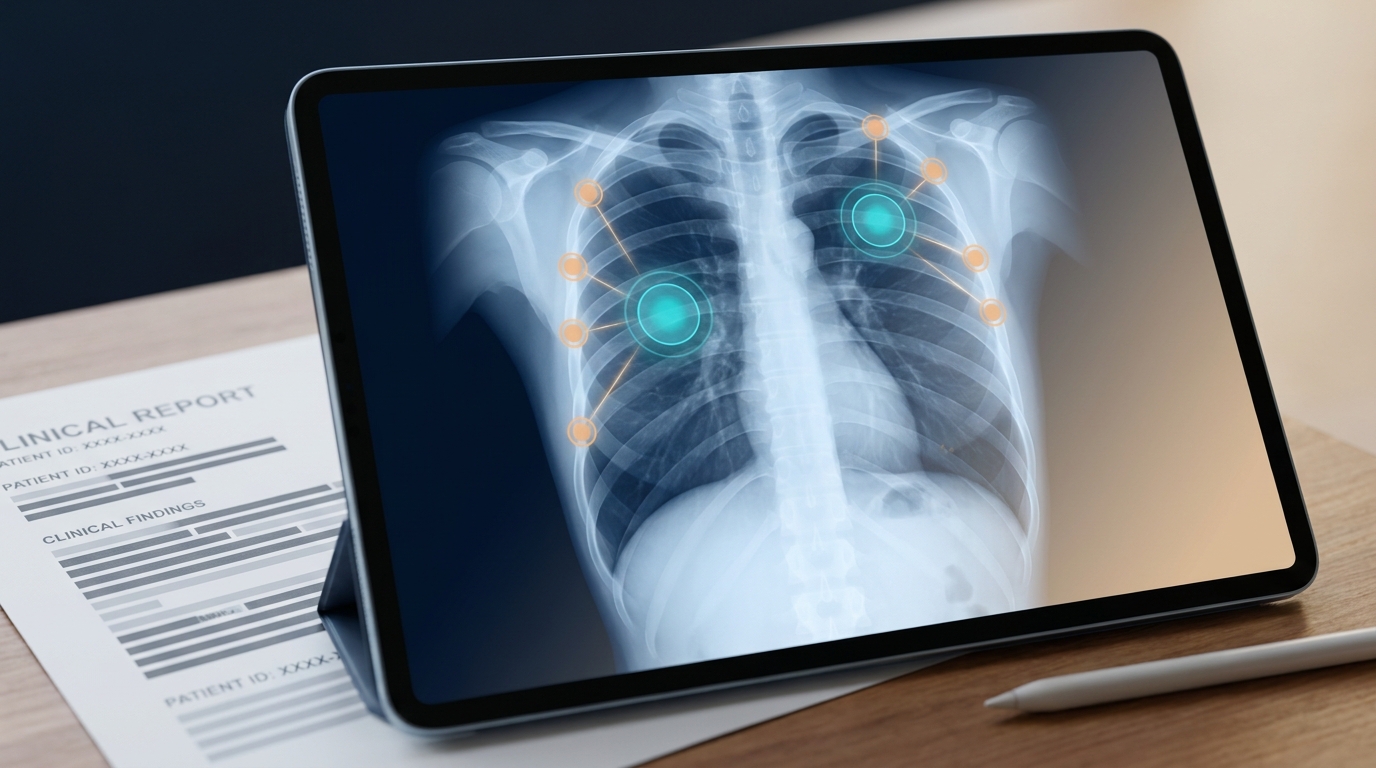
- Chest X-ray second opinions are the highest-volume use case because incidental lung nodules, cardiomegaly, and pleural findings are frequently reported and require careful interpretation.
- Premedice's AI X-ray second opinion processes your report with zero data retention, leaving no trace of your medical information after the review is complete.
Try it yourself — free
Experience the medical AI that powers this article. Ask questions, check symptoms, or analyze lab results.
Not sure which tool fits? Compare what Premedice does.
What an X-Ray Second Opinion Actually Reviews
An X-ray second opinion is a review of the original radiology report by a second radiologist or an AI clinical review tool. The reviewer reads the report's findings section, evaluates the radiologist's impression, and produces an independent analysis. For AI reviews, the report is processed in under 20 seconds and the output is a plain-English summary that classifies each finding by clinical significance. For radiologist second reads, the reviewer may also examine the original images if they are provided.
The clinical value of an X-ray second opinion depends on the type of study and the complexity of the findings. A 2020 study in the Journal of the American College of Radiology found that second radiologist reads of X-rays change management in 8-15% of cases, a lower rate than MRI second opinions (15-30%) because X-ray findings are typically more binary. A fracture is either present or not. A lung mass is either visible or not. The cases where second opinions matter most are the ones where the original report uses ambiguous language or fails to address a specific clinical question.
For patients, the practical question is whether the second opinion will change what happens next. If your X-ray report clearly states a fracture, a mass, or a normal study, a second opinion is unlikely to add information. If the report uses hedging language like 'cannot exclude' or 'consider,' if the findings section describes observations that the impression does not address, or if the clinical question you asked your doctor is not answered in the report, a second opinion is justified.
Chest X-Ray Second Opinions: The Most Common Use Case
Chest X-rays generate more second opinions than any other X-ray study because the findings range from unambiguous (clear pneumonia, clear fracture) to highly ambiguous (subtle nodule, borderline cardiomegaly, mild interstitial markings). A chest X-ray can detect lung nodules as small as 1-2 cm, but smaller nodules require CT for definitive characterization. When a chest X-ray report mentions a nodule, the next step is typically a CT scan to characterize it, not a second X-ray opinion.
The cases where a chest X-ray second opinion adds value are when the report describes a finding that the impression does not adequately address. A radiologist might note 'small nodular opacity in the right lower lobe' in the findings but write 'no acute cardiopulmonary process' in the impression. This discrepancy is worth investigating. Either the radiologist considered the nodule and decided it was not clinically significant (which the impression should explain), or the impression is incomplete. A second read can clarify which is the case.
Incidental findings on chest X-ray are common. A 2022 study in JAMA Internal Medicine found that 27% of chest X-rays performed for non-screening reasons in adults over 50 contained at least one incidental finding that required follow-up. The most common were lung nodules, cardiomegaly, and aortic calcification. Most of these findings are not urgent, but they require evaluation. An AI X-ray second opinion can flag which findings warrant follow-up and which are likely age-expected variants, helping you prioritize your next conversation with your doctor.
Bone and Joint X-Ray Second Opinions
Bone and joint X-rays are the highest-volume X-ray study, particularly for fractures, arthritis, and sports injuries. A second opinion on a bone X-ray is most valuable when the original report suggests a fracture that may not be present, or when a known fracture is described in a way that affects treatment decisions. For example, a 'possible nondisplaced fracture' on an ankle X-ray may or may not require a cast depending on the specific location and the patient's symptoms. A second read can clarify whether the finding is real and whether the treatment plan is appropriate.
For arthritis and degenerative joint disease, X-ray findings are typically clear and consistent across readers. A knee X-ray showing joint space narrowing, osteophytes, and subchondral sclerosis indicates osteoarthritis, and a second opinion is unlikely to change that diagnosis. The cases where a second opinion matters are when the report describes a focal lesion, an erosion pattern suggestive of inflammatory arthritis, or a bone lesion that may be benign or malignant. These findings require subspecialty review by a musculoskeletal radiologist.
Sports medicine X-rays, particularly for shoulder and elbow injuries, often require comparison with prior imaging. A second read with access to your prior X-rays can identify whether a finding is new, stable, or progressive. This context matters for treatment decisions. A healing fracture that looks unchanged on a follow-up X-ray is reassuring, while a new fracture at a different site suggests a more serious underlying condition. Our guide on MRI second opinions covers the MRI equivalents for these cases.
Spine X-Ray Second Opinions: Where Age-Expected Findings Dominate
Spine X-rays show degenerative changes in the majority of adults over 40, regardless of whether they have back pain. Disc space narrowing, osteophyte formation, vertebral endplate changes, and facet joint hypertrophy are all visible on plain X-rays and are documented because they are present, not because they require treatment. A second opinion on a spine X-ray is most valuable when the report describes a finding that may indicate a more serious condition, such as a compression fracture, a vertebral lesion, or alignment abnormalities that suggest instability.
Compression fractures are particularly important to identify correctly. A 2021 study in the Journal of Bone and Mineral Research found that up to 30% of vertebral compression fractures in older adults are missed on initial X-ray reading, especially when the fracture is mild or when the comparison with prior imaging is not available. A second read by a musculoskeletal radiologist, especially with access to prior imaging, can identify subtle compression fractures that change management significantly.
For patients with persistent back pain and a spine X-ray that shows only degenerative changes, the next step is typically an MRI rather than a second X-ray opinion. MRI is more sensitive for disc herniation, nerve compression, and soft tissue abnormalities that X-rays cannot visualize. The AI summary of your X-ray report can help you decide whether the X-ray findings warrant further investigation or whether the next step should be an MRI.
When You Should Skip the X-Ray Second Opinion
Not every X-ray warrants a second opinion. The cases where a second read is unlikely to add information include a normal X-ray with a clear 'no acute findings' impression, a clear fracture with a specific description (location, displacement, angulation), a known chronic condition with stable appearance on comparison with prior imaging, and a post-treatment X-ray showing expected healing or hardware position.
For these cases, the original report is sufficient. Your treating physician has the clinical context to interpret the findings and the X-ray in the context of your exam and history. A second read would re-describe the same findings without adding diagnostic information. The money and time spent on the second opinion would be better directed toward treatment, follow-up, or addressing the underlying condition.
The cases where a second opinion is justified include ambiguous reports with hedging language, findings that suggest a serious condition requiring confirmation, a clinical question that the report does not address, or a discrepancy between the X-ray findings and your symptoms. If your X-ray was normal but your symptoms are severe and persistent, the issue may be outside the scope of X-ray imaging, and an MRI or CT may be more productive than a second X-ray read.
How AI X-Ray Second Opinions Work
An AI X-ray second opinion is a structured review of your radiology report generated by a clinical AI model trained on millions of annotated X-ray reports. The AI reads the report's findings, identifies each documented observation, classifies it by clinical significance, and presents the results in a plain-English format designed for patients. The review takes under 20 seconds and produces a summary that includes a finding-by-finding breakdown, identification of age-expected versus clinically significant findings, and a recommendation on whether a formal radiologist second read is warranted.
The AI does not see the raw X-ray images. It reads the written report, which is the radiologist's authoritative summary of what they saw. For most cases, the AI's interpretation of the report is reliably close to what a second radiologist would write if given the same text. A 2024 study in Radiology: AI found that AI-generated summaries of chest X-ray reports agreed with second radiologist reads on the primary finding in 91% of cases. The remaining 9% of disagreements were typically cases where the original report was ambiguous or where the X-ray images themselves needed direct review.
Privacy is a key consideration when using an AI X-ray second opinion. Premedice uses a zero-retention architecture: your report is processed in memory to generate the summary and then immediately deleted. No patient profile is created, no data is stored after the session, and no information is shared with third parties. The AI does not learn from your data and does not pass it to any external system. For patients who value data minimization, this is a meaningful architectural difference compared to the traditional model of sending X-rays to a second facility for review.
Common X-Ray Terms That Sound Worse Than They Are
Several X-ray findings are documented because they are visible, not because they require treatment. Understanding these terms prevents unnecessary anxiety and unnecessary second opinions.
Degenerative changes, including osteophytes, disc space narrowing, and facet joint hypertrophy, describe wear-and-tear that accumulates with age. These findings are present in the majority of adults over 40 and are documented because they are visible, not because they cause pain. When the impression does not mention them as a cause of your symptoms, they are incidental findings.
Scoliosis, or lateral curvature of the spine, is another finding that triggers unnecessary concern. Mild scoliosis (less than 20 degrees) is present in 2-3% of the population and rarely requires intervention. A second opinion is justified only when the curvature is severe, progressive, or associated with pain or neurological symptoms. Mild scoliosis documented on a routine X-ray is typically an incidental finding.
Bone islands, or enostoses, are benign bone growths that appear as dense spots on X-rays. They are present in 1-2% of adults and are almost always incidental. A second opinion is rarely needed for a clearly described bone island. The finding warrants further evaluation only when the report uses ambiguous language that cannot exclude a more serious lesion.
How to Use an X-Ray Second Opinion in Your Clinical Workflow
The most effective use of an X-ray second opinion is as the first step in a layered review process. Read your own X-ray report using the structure and a plain-English glossary, run the report through an AI review tool to get a structured summary, and if the AI flags ambiguity or a finding that warrants follow-up, schedule a formal radiologist second read. Bring the AI summary, the original report, and the second read to your next appointment with the referring physician.
This workflow respects the limits of AI while maximizing its strengths. AI is fast, consistent, and excellent at pattern recognition in medical language. It cannot replace the clinical judgment a radiologist applies when reading the X-ray images, and it cannot integrate your full clinical history the way your referring physician can. The optimal strategy uses AI for what it does best, reserves human specialist review for the interpretive work that requires it, and keeps you in the driver's seat throughout the process.
For patients who want to understand their X-ray report before paying for a second opinion, the AI review is the most cost-effective first step. It costs nothing, takes seconds, and produces a structured summary that you can use to decide whether further investment is warranted. If the AI confirms your report is clear and the findings are likely incidental, you may not need a second opinion at all. If the AI flags ambiguity, you have a specific question to bring to the second reader. The combination of preparation and targeted follow-up is more efficient than either approach alone.
Ready to try Premedice?
Get instant, AI-powered explanations of your lab results and symptoms — powered by 300+ medical databases.
Continue Reading


Most Popular
Best AI Medical Models in 2026: MedQA Scores Compared
ResearchMedGemma: Open-Source Medical AI That Runs on Your Hardware
TechnologyMed-PaLM 2: 86.5% MedQA Score, Zero Doctors Using It (2026)
ResearchAI Symptom Checker Architecture: How Premedice Cuts Hallucinations 3.8x
TechnologyMedical AI Privacy: AES-256 + Zero-Knowledge Architecture
SecurityDr. Elena Rostova, MD, PhD
Dr. Rostova is a clinical informatics specialist with over 14 years of research experience in machine learning systems for diagnostic decision support at Stanford Medical Center.
Expert Takeaway
An X-ray second opinion is justified when the original report is ambiguous, when the clinical question is not clearly answered, or when the findings suggest a serious condition that warrants confirmation. For clear reports with specific findings, the second opinion adds cost without adding information.
Browse by Topic
QFrequently Asked Questions
Q1How much does an X-ray second opinion cost?
A formal X-ray second opinion from a radiologist typically costs between $50 and $300, depending on the body part and the facility. AI X-ray second opinions are free and produce a structured summary in under 20 seconds. Insurance coverage for formal X-ray second opinions varies; some plans cover second reads when ordered by a physician, but out-of-pocket second reads are generally not covered.
Q2Can an AI X-ray second opinion detect a missed fracture?
An AI X-ray second opinion reads the written report, not the raw X-ray images. It cannot detect a fracture the radiologist missed on the images but did not document. What it can do is identify language patterns where the findings section describes observations that the impression does not address, which can prompt a formal second read that catches the omission. For cases where you suspect a missed fracture, a formal radiologist second read with image access is required.
Q3When should I get a chest X-ray second opinion?
A chest X-ray second opinion is most valuable when the original report mentions a nodule, mass, or other finding that the impression does not adequately address, when the report uses ambiguous language, or when the clinical question you asked your doctor is not clearly answered. For normal chest X-rays or clear findings (pneumonia, clear heart size), a second opinion is unlikely to add information.
Q4Is an AI X-ray second opinion as reliable as a radiologist?
For language interpretation and pattern recognition, AI X-ray second opinions are reliable. A 2024 study in Radiology: AI found 91% agreement between AI-generated summaries and second radiologist reads on chest X-ray reports. For ambiguous cases or complex imaging, a formal radiologist read remains necessary. The AI summary serves as a preparation and screening tool, not a replacement for specialist review.
Q5Should I get a second opinion if my X-ray was normal?
Generally no. A normal X-ray with clear no acute findings in the impression is one of the least productive studies to send for a second read. The second radiologist is unlikely to find something the first reader missed on a normal study. If your symptoms persist despite a normal X-ray, the issue may be outside the scope of X-ray imaging, and a CT, MRI, or specialist evaluation may be more productive.
Q6How long does an AI X-ray second opinion take?
A purpose-built AI X-ray second opinion tool processes your report and produces a summary in under 20 seconds. The output includes a finding-by-finding breakdown, identification of age-expected versus clinically significant findings, and a recommendation on whether a formal radiologist second read is warranted. The entire process is completed before you finish reading this answer.
Verified References & Literature
Diagnostic Disagreement in Radiology: A Systematic Review
Journal of the American College of Radiology, 2020
View SourceVertebral Compression Fracture Detection on Plain Radiographs
Journal of Bone and Mineral Research, 2021
View SourceAI-Assisted Interpretation of Chest X-Ray Reports
Radiology: Artificial Intelligence, 2024
View SourceGet a structured second read in seconds
Upload lab results, describe symptoms, or ask about a diagnosis — Premedice gives you medically-grounded answers backed by 30+ clinical databases.